Diagnosis and Treatment of Myxomatous Mitral Valve Disease in Dogs
£25.00 + VAT
SKU: CAR-MVVD

Add up to 3 PDFs to your basket together with an Online Course, and get the PDFs for FREE!!!
Overview
Myxomatous mitral valve disease (MMVD) is the most common acquired canine heart disease and represents approximately 75% of cardiac cases seen in practice. Small and medium-sized breeds are overrepresented, particularly Cavalier King Charles Spaniels, Dachshunds, Yorkshire Terriers, and Chihuahuas. Cavalier King Charles Spaniels often develop disease earlier and experience faster progression.
The paper reviews updated recommendations from the American College of Veterinary Internal Medicine (ACVIM) following publication of the EPIC study, which demonstrated that pimobendan delays the onset of congestive heart failure (CHF) in dogs with preclinical MMVD and cardiomegaly.
The ACVIM staging system divides MMVD into four stages. Stage A includes dogs at risk for future disease but with no current evidence of MMVD. Stage B includes dogs with structural evidence of MMVD but no history of CHF. Stage B is further divided into B1, where no cardiomegaly is present, and B2, where cardiac enlargement has developed. Stage C includes dogs with current or previous CHF, while Stage D includes dogs with refractory CHF despite standard treatment.
Stage A dogs have no murmur or echocardiographic evidence of disease but belong to predisposed breeds. Stage B dogs typically have a left apical systolic murmur and echocardiographic evidence of mitral valve prolapse, thickening, and regurgitation.
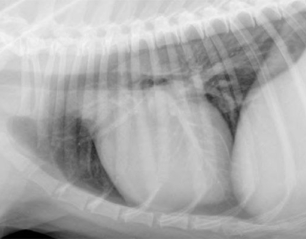
Stage B1 dogs have no evidence of cardiomegaly. Stage B2 dogs meet specific criteria for cardiac enlargement, including murmur intensity of at least 3/6, left atrial to aortic ratio (LA:Ao) ≥1.6, normalised left ventricular internal diameter in diastole (LVIDDN) ≥1.7, and increased vertebral heart scale (VHS). Both left atrial and left ventricular enlargement should be present before treatment is initiated.
The paper discusses echocardiographic and radiographic methods for assessment of cardiac enlargement. Vertebral left atrial size (VLAS) is described as a newer radiographic index being evaluated for identifying stage B2 disease.
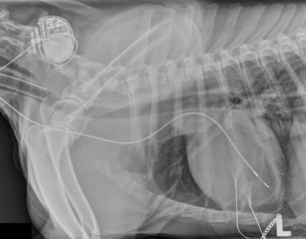
Dogs with Stage C MMVD have evidence of CHF, ideally confirmed radiographically. Typical findings include pulmonary oedema, pulmonary venous enlargement, and cardiomegaly. Clinical signs include tachypnoea, dyspnoea, lethargy, exercise intolerance, and reduced appetite.
The article emphasises that coughing is not strongly associated with CHF. Many dogs with MMVD cough because of concurrent respiratory disease or compression of the mainstem bronchus by an enlarged left atrium. Thoracic radiography and NT-proBNP measurement may help determine whether clinical signs are cardiac in origin.
Stage D disease is defined as CHF requiring more than 8 mg/kg/day of furosemide or equivalent torasemide dosing alongside standard therapy with pimobendan, ACE inhibitors, and spironolactone.
Management recommendations vary according to disease stage. No treatment is recommended for Stages A or B1. Stage B2 dogs should receive pimobendan at 0.25–0.3 mg/kg twice daily. ACE inhibitors, beta blockers, and spironolactone are not routinely recommended at this stage.
Acute treatment of Stage C CHF includes oxygen supplementation, furosemide, pimobendan, drainage of effusions if required, and careful nursing care. Some patients may require sedation, vasodilators, or inotropic support. Chronic management includes oral diuretics, pimobendan, ACE inhibitors, spironolactone, monitoring of renal parameters and electrolytes, and home monitoring of sleeping respiratory rate.
Dietary management focuses on maintaining adequate caloric intake, avoiding cachexia, modest sodium restriction, and supplementation of potassium, magnesium, or omega-3 fatty acids when indicated.
Management of Stage D disease includes escalation of diuretic therapy, switching from furosemide to torasemide when appropriate, increased pimobendan dosing, sildenafil for pulmonary hypertension, and additional strategies for diuretic resistance.
Surgical mitral valve repair is discussed as a treatment option available in selected cases.
The paper concludes that updated ACVIM guidelines provide structured recommendations for diagnosis, staging, monitoring, and treatment of MMVD. Accurate differentiation between Stage B1 and B2 disease requires careful echocardiographic assessment, while recognition of CHF can be challenging and may require radiography and clinical monitoring.
 This is a PDF of an article published in VetCPD Journal. For the most current CPD we highly recommend our range of 70 Online Courses – see below for details. Please note that these articles do NOT have exams associated with them.