Clinical approach to conjunctivitis
When faced with conjunctivitis, the first step is to decide whether the conjunctiva is the main lesion or whether it is reacting secondarily to something else. In dogs, conjunctivitis is often secondary, especially to adnexal abnormalities or KCS. In cats, primary infectious conjunctivitis is much more common.
The nature of the discharge is relevant, whether it is serous, mucoid, mucopurulent, or purulent. A painful eye, presence of blepharospasm, hyperaemia vs chemosis and thickening, determining if the redness truly conjunctival, or is there deeper episcleral congestion are all relevant. Checking if the tear film and eyelids are normal, and whether there is corneal involvement, are all important considerations.
Schirmer tear testing is an important part of the assessment of dogs with conjunctivitis and should generally be performed routinely, as outlined in Module 1. It is best done early in the examination, before topical medications or fluorescein are applied, unless globe integrity is doubtful, for example in the presence of a very deep corneal ulcer. Fluorescein staining should be used whenever there is ocular pain, corneal opacity, or any suspicion of ulceration. The examination should also include careful assessment of the eyelids, nictitans, conjunctival fornices, and cornea, as disease in these structures commonly mimics or contributes to conjunctival disease.
Clinical approach to conjunctivitis: Canine conjunctivitis
In dogs, the aetiology of conjunctivitis often remains uncertain, because the conjunctival response is quite non-specific and many cases are mild or self-limiting. Nevertheless, primary infectious conjunctivitis is uncommon in adult dogs, and a search for an underlying cause is usually worthwhile. Possible causes include bacterial infection, viral infection….. [purchase course to learn more]
Clinical approach to conjunctivitis: Feline conjunctivitis
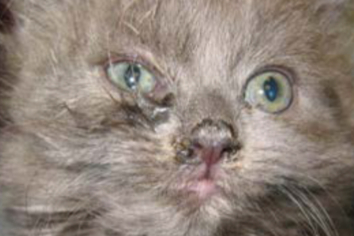
In cats, primary infectious conjunctivitis is common, whereas secondary conjunctivitis due to adnexal disease or KCS is much less common. Possible causes include viral infection, Chlamydia felis, Mycoplasma species….[purchase course to learn more]
For more information on the Clinical Approach to Conjunctivitis, purchase the Small Animal Ophthalmology course! Click Here